From suppliers to enablers
The world of work is rapidly changing – and the change itself is not new but the fact that it’s happening at the same time is: the high-speed technological transformation, driven by the acceleration of digitalization by means of artificial intelligence, geopolitical disruptions, demographics, intense volatility, and growing flexibilization of human ways of life – especially of younger generations – fundamentally change the rules of engagement for work. Employers wanting to remain fit for the future in that environment need to become active in shaping the future.
The expert
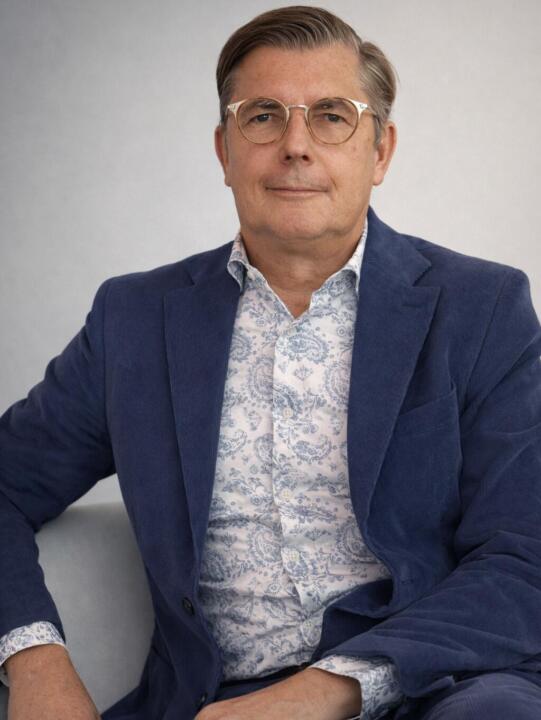
Jörg Staff is CEO of Deutsche Gesellschaft für Personalführung (German Society for HR Leadership), Future Advisor of Zukunftsinstituts (Future Institute) and Speaker. For more than 25 years he’s been active in top executive and consulting roles for companies such as SAP, Deutsche Post, Daimler, KPMG, Cisco, etc. For his expertise in HRM, leadership, and organizational transformation he has received numerous national and international awards including the German HR Management Award, CHRO of the Year, and the Financial Times’ Diversity Award.
Tomorrow’s world of work is not going to look identical everywhere. While the global North is struggling with a shrinking workforce and growing skepticism of the future among young people the global South is facing the oppositive issue – a massive surplus of young people with a lot of fewer job opportunities. What used to be deemed to be the response on the part of employers – hybrid work, flatter hierarchies, more self-determination – will not suffice tomorrow. Too many of these initiatives serve well-being as an end in itself; not enough of them ask the truly decisive questions: what does it mean to be an employer when professional biographies are no longer career ladders but networks of transitions, re-orientiation, and parallel projects?
Generation Z is providing clear signals. Many no longer automatically combine professional success with a hierarchical career but with meaning, the right fit, and individual development, and, according to a survey by Deloitte consultants, refuse job offers that don’t match their values – and with a forward-thinking technological focus. More than half of young people deliberately and naturally uses AI applications – as part of their everyday life (more about that later). This generation is not waiting to be picked up. It self-confidently decides whether employers deserve to be chosen.
The consequence is clear: Employers of the future will no longer be classic suppliers. They’re going to become participants in shaping individual ways of life and active shapers of a world of work that they can no longer control by themselves. Jobs – not least due to young technologies such as humanoid robotics, additive manufacturing, or virtual applications – are turning into rooms of opportunity. That calls for a new mindset going beyond the existing idea of what makes a good employer but that change is not a one-way street: it takes a willingness to learn, individual responsibility, and readiness to actively help shape working worlds instead of passively consuming them.
“Augmentation Architect: the symbiosis of humans and AI”
No doubt, artificial intelligence will be a decisive element of shaping future worlds of work but regarding AI solely as a mere efficiency tool means to underestimate its potential. And rating it as a threat means losing the people that can best work with it.
Organizations that are fit for the future think about AI according to the principle of augmentation: not humans or machines but humans and machines. AI becomes a partner that boosts human strengths, underpins strategic decisions based on data, and takes over repetitive tasks. Decisive in this regard is not the technology alone but the cultural transformation enabling this symbiosis toward a techno-social world of work.
In the role of “Augmentation Architect,” organizations that are fit for the future are actively working on AI empowerment: They enable employees to understand, use, and critically question AI – linked to a strategic skills architecture and proactive handling of AI ethics, data protection, and compliance. Employees, though, need to engage in this as well: AI empowerment presupposes curiosity, willingness to learn, and readiness to actively question previous ways of working.
Today, Generation Z (approx. 1997–2012) already accounts for 20–30 % of the working population in many countries and by 2030 will be the largest group of employees in many OECD countries
According to Deloitte, more than half of Generation Z uses AI every day for solving routine problems on the job, which is a peak value in a comparison of generations. At the same time, the so-called “junior-job paradox” shows the down side of this development: according to information by the World Economic Forum, entry-level positions have decreased by nearly 30 percent since the beginning of 2024 because AI is increasingly taking over exactly those routine jobs in which career starters have traditionally been gathering initial experience. The strategic response to that is augmentation: not replacing juniors but involving them in complex, creative, and strategic tasks early on. In that way, beginners become participants in digital transformation. That’s a clever organizational strategy.
Ecosystem Orchestrator: a platform instead of a pyramid
The classic hierarchy pyramid is losing effectiveness in the increasingly complex and volatile world of work. Consequently, employers that are fit for the future position themselves as a platform and orchestrate dynamic networks of employees, gig workers, technological, and external partners. Decisions are made where expertise resides – not where hierarchies end.
“Tomorrow’s employers […] don’t offer jobs – they open access to missions.”
Jörg Staff
The consequence is fundamental: Tomorrow’s employers no longer recruit – they orchestrate. They don’t offer jobs – they open access to missions. Attractiveness doesn’t lie strictly in the compensation package but in the shared purpose. “Skills first” instead of “degree first” becomes an operational principle: for the assignment of tasks proven competencies are more important than biographies and degrees. Integrated learning ecosystems as well as internal and external knowledge sources – so-called explorer networks – as well as microlearning are integrated into daily work.
The new currency of success is not stored knowledge but the collective learning ability of the organization. And the new bonding currency follows the “happiness approach” (see glossary at right) of the Zukunftsinstitut (Future Institute): wellbeing, sense of purpose, and the opportunity to actively shape one’s life – even beyond the job. Radical flexibility in terms of working hours, place of work, and personalized fringe benefits is not a concession but the logical response to a generation that considers hybrid models not as a privilege but as a basic prerequisite. Roles replace titles. Competence replaces status, so teaching and learning become a strategic core. Not to be ignored in that regard is the fact that organizations that are fit for the future don’t orchestrate homogeneous workforces. They lead as many as four generations at the same time – Baby-boomers, Generation X, Millennials, and Generation Z – with partly fundamentally different expectations of leadership, flexibility, and meaning. Consequently “generational leadership” is a strategic core competency in this context.
“Human Companion: development instead of management”
Structures don’t connect people. What employees need in times of change is true individual companionship. That’s why employers of the future see themselves as human companions – as development partners that not only assign tasks to their people but accompany them through life on their paths that are often non-linear ones.
The classic career ladder is replaced by a new reality: Professional biographies take place in micro-transitions, with changes between roles, forms of work, sabbaticals, and stages in life. Consequently, leaders evolve from hierarchical decision makers to emphatic coaches providing guidance and creating psychological security.
“The changing world of work and the new expectation of the young generation forces employers to make a true paradigm shift.”
Jörg Staff
In addition, there’s a second, frequently underrated dimension: Employers of the future aren’t only companions of individuals – but also enablers of Human Companionship among people. Studies from trend research have shown that the more digital and connected the world of work becomes the stronger will be the need for authenticity, personal interaction, and vivid relationships, according to Zukunftsinstitut GmbH. The human-to-human-experience – or H2HX for short – thus becomes a decisive differentiation characteristic of an organization. Companies that are fit for the future design working environments – both in physical and hybrid ways – so that spontaneous interactions, a sense of belonging, and real engagement can emerge. Bonding results from high-quality relationships and not from control.
Especially for Generation Z, this dimension is essential. They regard good leadership as a key factor of their motivation on the job. Many of them actively look to their direct leaders for backing and stability in view of economic and social uncertainties. They don’t want managers monitoring their tasks. They want leaders that see the people that are performing their tasks, that are approachable and make constructive contributions as needed. Good leadership in a multi-generational organization doesn’t mean giving everyone the same – but everybody the right thing.
“The future doesn’t wait – it’s currently being written jointly”
The changing world of work and the new expectations of the young generation forces employers into making a real paradigm shift for which global differences must be considered. While young people in Germany and large parts in Western Europe enter the job market with growing skepticism of the future, their peers in threshold countries like India or Brazil view their professional future in a clearly more optimistic light despite more difficult starting bases.
The future of work will be decided by a mindset. Employers must evolve from suppliers to enablers – and they’ll only be able to do so if they take the expectations of the young generation seriously.
Generation Z is the most precise compass that organizations currently have because what young people demand of employers today – meaning, true development, human connection, social effectiveness, and courage for augmentation – essentially is what any organization that’s fit for the future has to deliver anyway. It's just that young people ask these questions with a louder voice, greater consistency, and without the willingness to settle for halfhearted answers.
Consequently, the crucial question is not “How do we win over Generation Z? but “As an organization, are we ready for the needs of a world of work that’s fit for the future?” The transition doesn’t begin with the next strategy paper but with a new mindset: courageous, learning, and human-centric. And that can be successful only with a joint effort: together with young people, not above their heads. But the opposite is true as well: demanding space for potential also implies the willingness to fill them – with the right mindset, engagement, and willingness to assume responsibility.
Glossary of the modern world of work
Techno-Social World of Work
Technological and social factors fuse. In the techno-social world of work people integrate technology by debunking its artificiality and making it part of themselves. In terms of AI, humans and technology form a symbiosis.
Explorer Networks
Pioneers, thinkers, and doers that are connected beyond industry and national borders use the collective intelligence of their members to exchange knowledge, experience, and time-tested methods for accelerating innovation cycles in their companies.
Generational Leadership
Europe is seeing a massive demographical change that’s manifesting itself in an aging society and varying expectations of different age groups at work. Mixed-age workforces require HR policies and leadership considering both the needs of the individual generations and differences within each age group.
AI Empowerment
Optimal utilization of the capabilities of artificial intelligence in companies and other organizations is crucial. AI empowerment not only requires the implementation of the technology but also enabling employees to use and understand AI tools.
Human Companionship
HR departments are experiencing an evolution: While today they’re still typically being dominated by bureaucracy and the pressures of recruiting they’re going to be accompanying employees on atypical career paths, support them with holistic health challenges, and ensure social connection.
Human-to-Human Experience
In a digitally connected world, people have a growing need to interact with others in authentic, personal, and meaningful ways. This means that technology should be used to strengthen human bonding – and not to replace it. In addition, companies that are fit for the future create opportunities and room for experiences between people.
Happiness Approach
For the job market of the future, not the number of workers will be decisive but the question of what talents organizations can attract, pool, and retain. That means not only recruiting young talent matters but even more so retaining and developing young workers. Among other things, that will be achieved by addressing the factor of “wellbeing,” for instance by meaningful activities.


